He Is Making Gold. Where Did the Money Go?
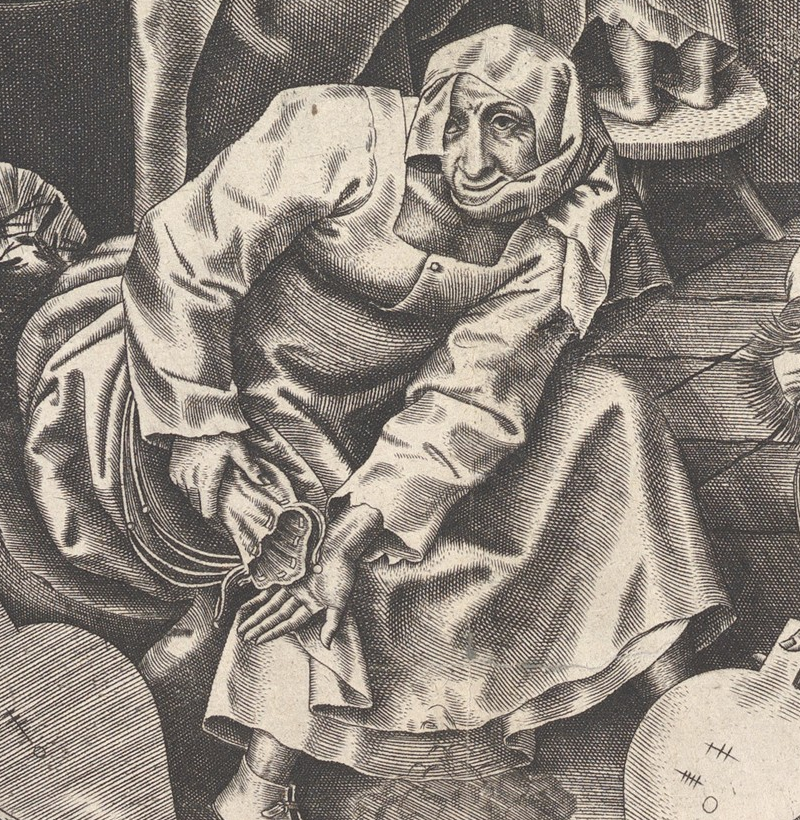
Her purse is empty. Her husband is making gold. Follow the money — then find the family's future, hiding in the same picture.
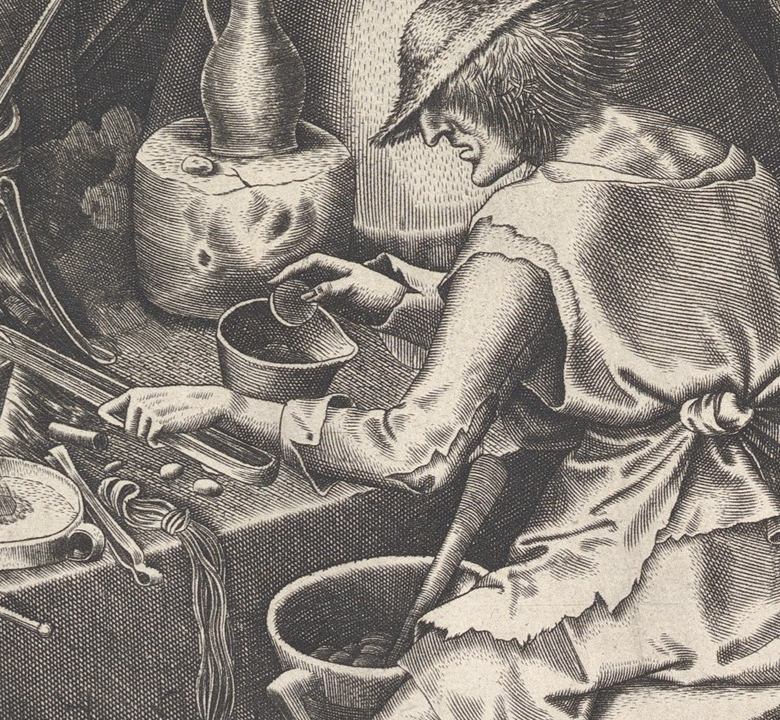
The money is still here. Look at his hand
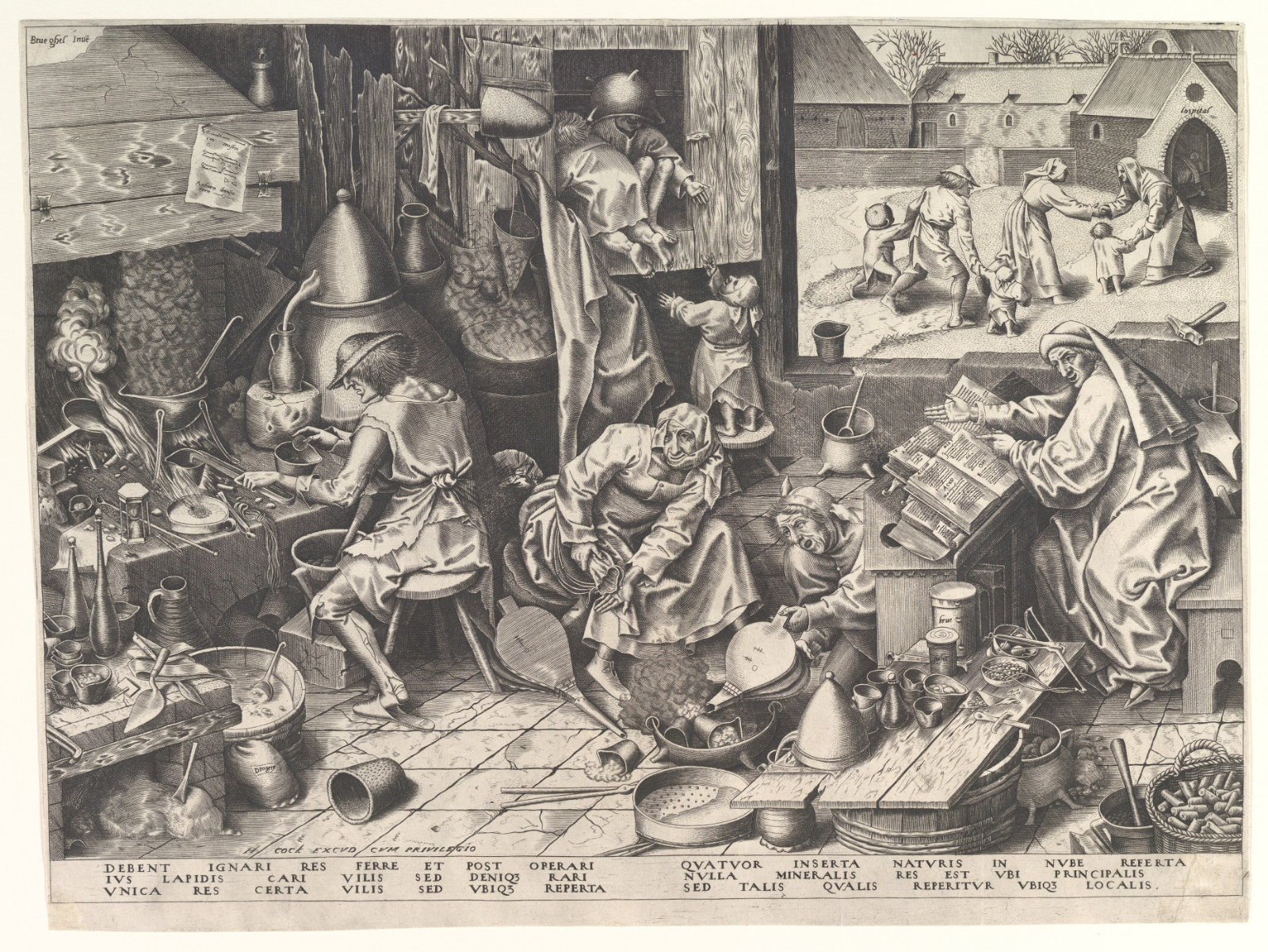
At the left, a man sits beside a fire. Between his fingers is a small circle. Beneath it, a vessel. This is not the triumphant moment when gold finally comes out. Money that already exists is going in.
The National Gallery of Art interprets this as the alchemist's last coin. Beside the empty purse, that tiny gesture becomes a verdict on the household budget. One more experiment — and nothing left to pay for the next.
What is left for the children?
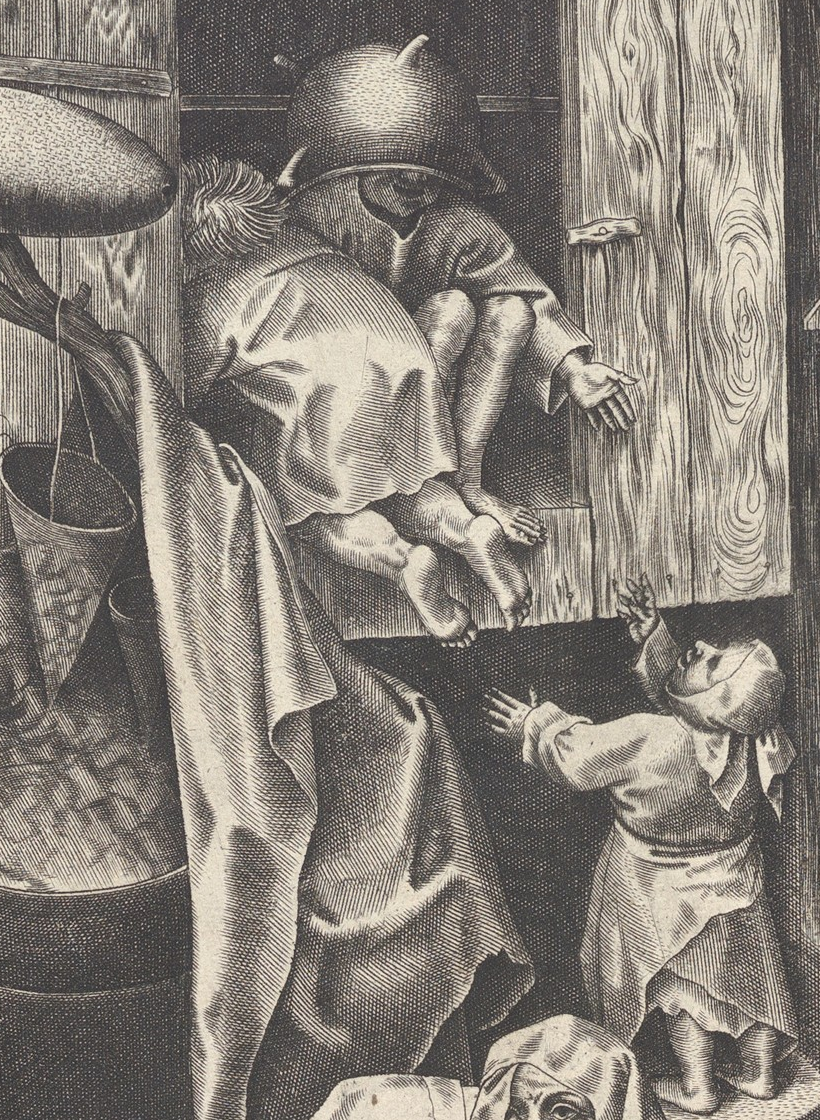
Look up from the purse to the cupboard. Children are playing in it. They occupy the shelves; there are no food stores to see. In this satire, the bare cupboard carries on the argument of the empty purse.
Remember the child wearing an upside-down pot. Kitchen equipment makes a splendid little crown. In a moment, this comic detail will help us read a much less comic ending.
Now find that hat again
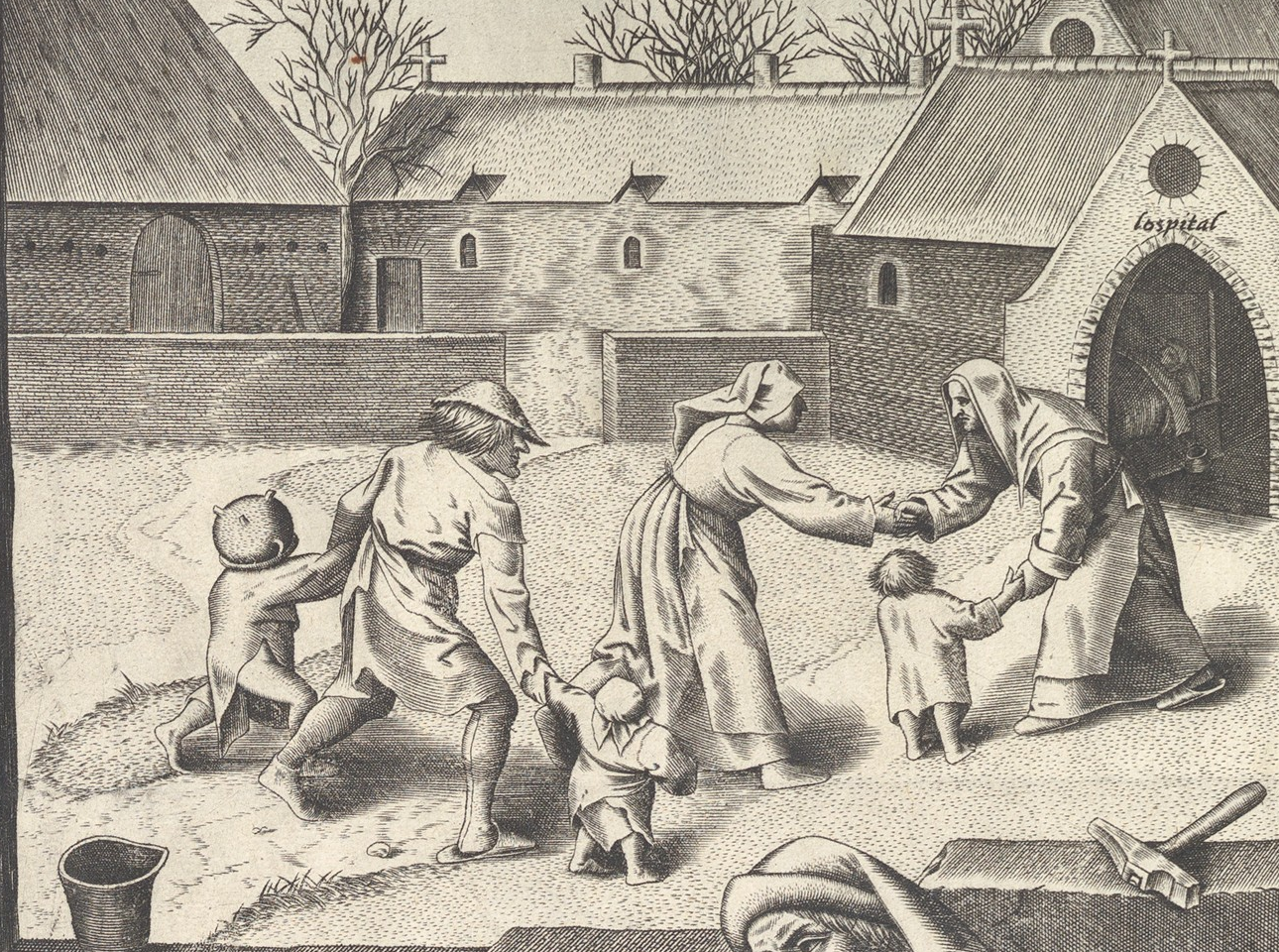
In the upper-right corner, adults and children appear again. One small member of the procession wears that familiar headgear. These are not random neighbours outside the window: the same sheet contains the family's future.
The Philadelphia Museum of Art identifies this as the ruined alchemist and his family arriving at the poorhouse, a charitable refuge. The entrance is marked hospital. Here the sign completes a story about poverty, rather than announcing a sudden illness.
One sheet. Two moments
Now look at the entire engraving. Inside the workshop, the experiment is still in progress. Outside, its consequences have already arrived. The artist does not need a second page: he has placed it inside the first.
The alchemist is occupied with a miracle. We can follow a much simpler chain: coin, empty purse, bare cupboard, someone else's door. The promise of wealth produces its opposite. And the most human clue is a child's game continuing on both sides of that divide.
Whose story is this?
We are looking at satire, not a documentary record of a particular family. Philips Galle engraved the design by Pieter Bruegel the Elder. The Metropolitan Museum of Art dates this impression to after 1558.
Nor does one foolish figure stand for all alchemy. The National Gallery's study compares mocking portrayals with sympathetic ones and relates alchemical work to early chemistry. Our question here is narrower: how does this particular print make us notice the cost of an obsession?
Every detail above is cropped from the same museum reproduction. No lines have been invented; the complete sheet is here for your own inspection. A high-resolution original is available through the first source below.