What is lying at Holbein’s ambassadors’ feet?
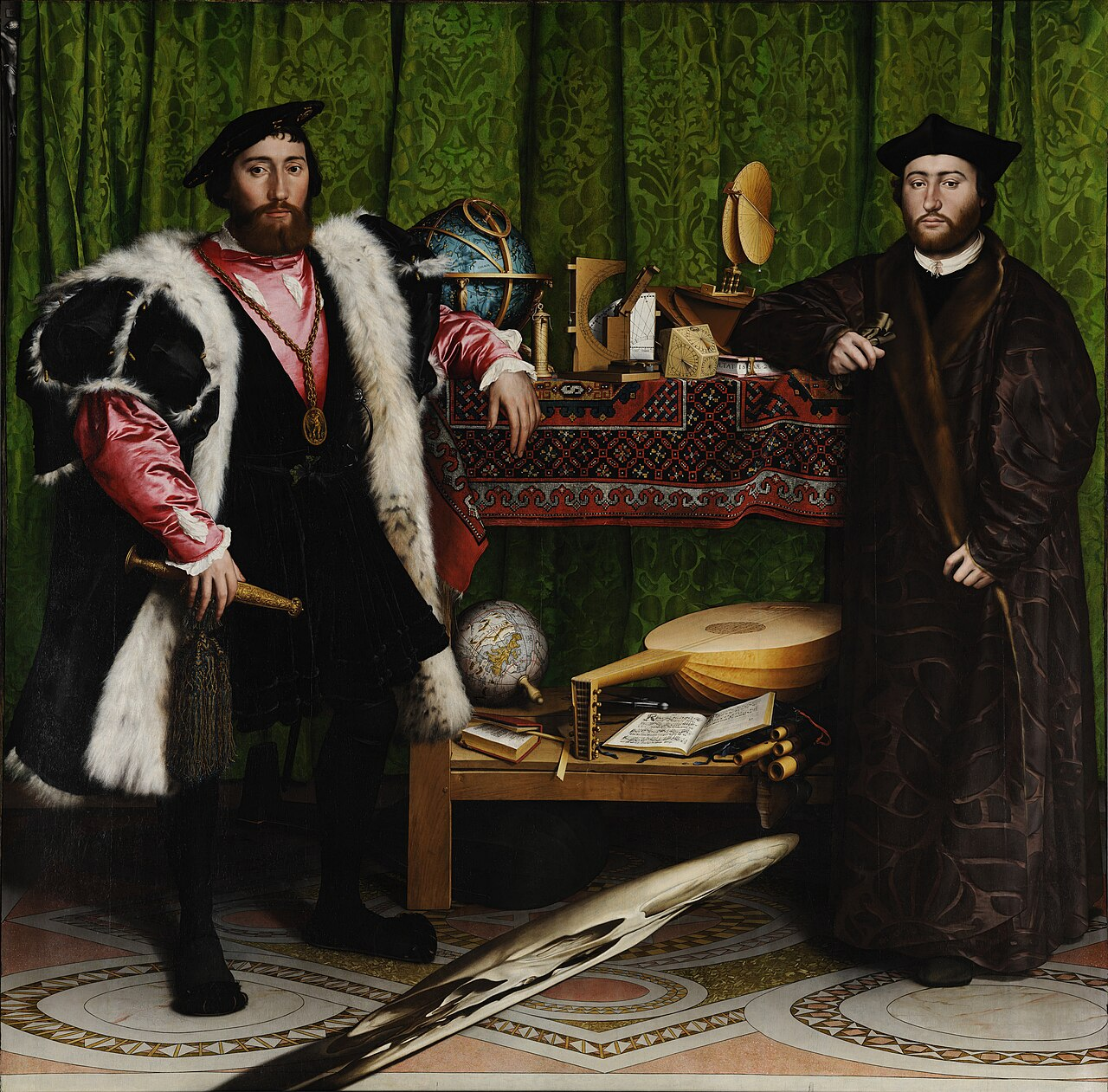
Name three objects in this painting. Now name the pale streak at the men’s feet. What is it?
One object refuses to be an object
Holbein painted The Ambassadors in 1533. The French ambassador Jean de Dinteville stands on the left; his friend Georges de Selve is on the right. The objects between them could furnish a small exhibition of knowledge and wealth.
Choose three objects and silently name them. Now do the same with the streak across the floor. Stuck? Keep your guess. Notice where your confidence runs out in a picture that seems so precise.
What would you change first?
Choose a way to test your guess. This is a looking exercise, not an art-history exam; the explanations are also available without JavaScript.
Answers and explanations
- Enlarge that part of the picture: Magnification reveals brushwork and edges, but keeps the same distorted proportions.
- Look at the picture from one side: Yes: the angle at which you see the surface matters here.
- Turn the painting upside down: The streak changes direction, but turning it does not remove its elongated proportions.
The viewer is the part that moves
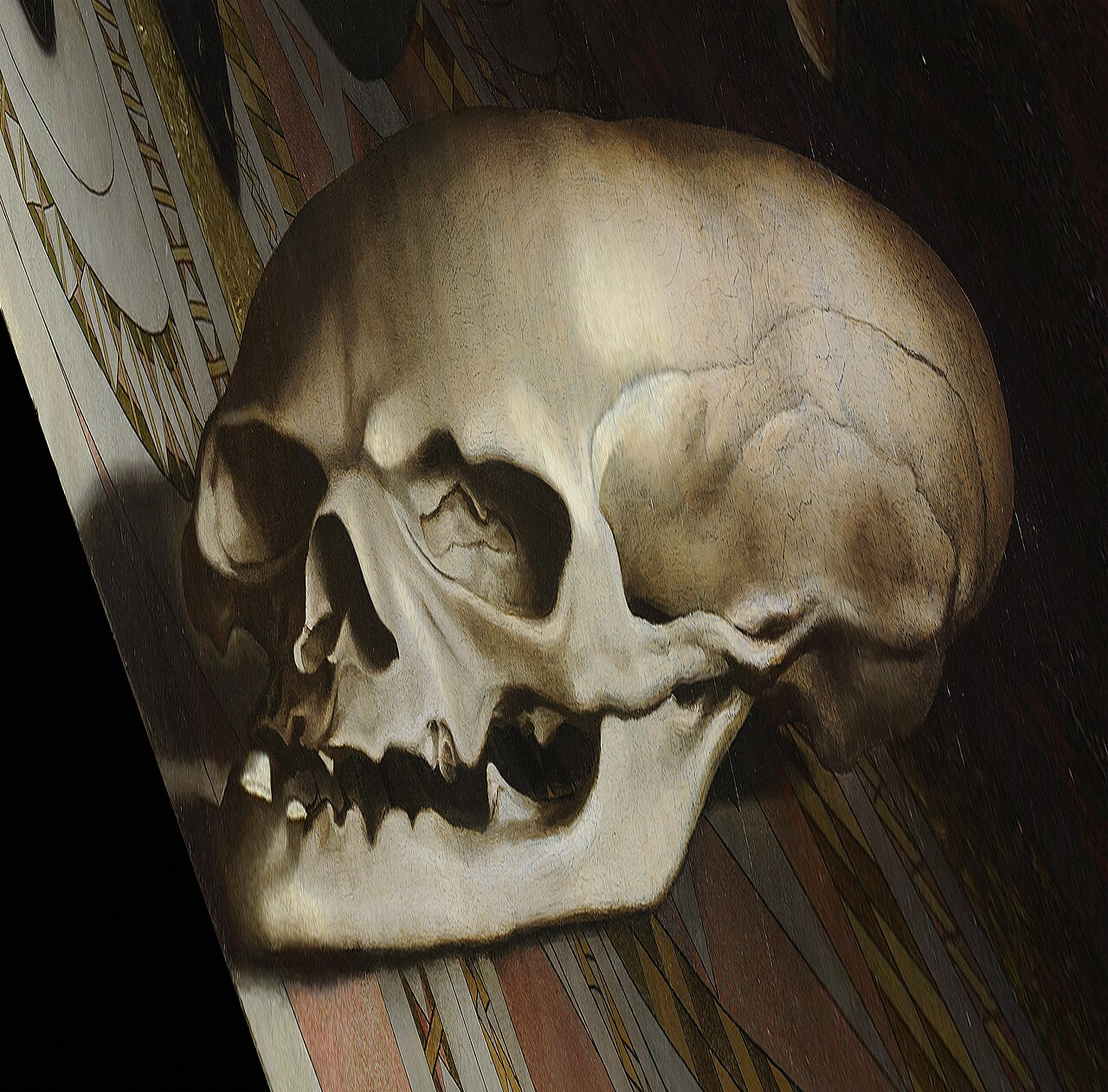
It is a skull. Holbein painted it in anamorphosis: the shape becomes recognisable from a sharp angle on the right, close to the plane of the painting.
On a screen, try looking along its surface from the right, adjusting your height and head angle. Reflections and a small display can make this difficult. The digital reprojection below lets you inspect the shape; it does not reproduce the experience of moving in front of the painting.
Both views do not get easier at once
Compare the man’s face in the full portrait with the skull in the corrected detail. These are two different viewing conditions. As we move far to one side, the formal portrait also narrows.
Here is one way to read that transition: possessions and status fill the scene, until another viewpoint makes a reminder of death — memento mori — take over. That is our reading of the visual change, not a decoded confession from the painter.
Go back: there is another break in the picture
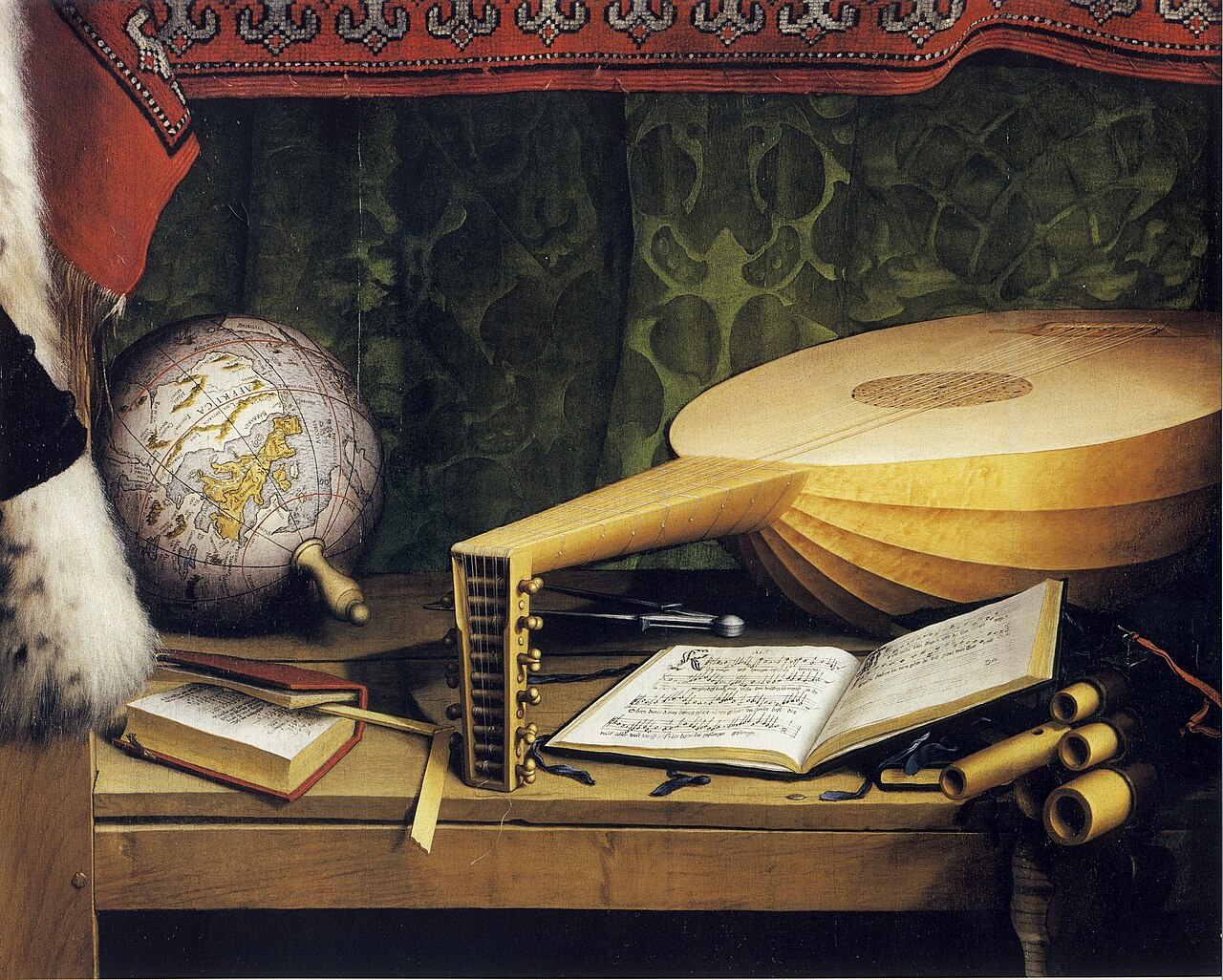
The lute has a broken string. Find it in the enlarged detail. The museum connects it with discord; the break is visible, while its symbolic meaning is an interpretation.
Now return to the first image. Knowing the answer need not stop the streak looking like a streak. Knowing what an object is and having a useful view of it are different things.
Holbein did not hide the answer behind the painting. It lay in front of everything else. To see it, we had to give up the most familiar place: directly in front of the centre.

